Rooftop Dryer Vent Cleaning in Minnesota — And Why Your Cap Is Probably Wrong
So, you have a rooftop dryer vent? That’s unfortunate. To me, a rooftop dryer vent is quite possibly one of the worst ideas/locations to have a dryer vent exhaust/terminate in Minnesota, or any cold weather state for that matter.
Here is a list of reasons why:
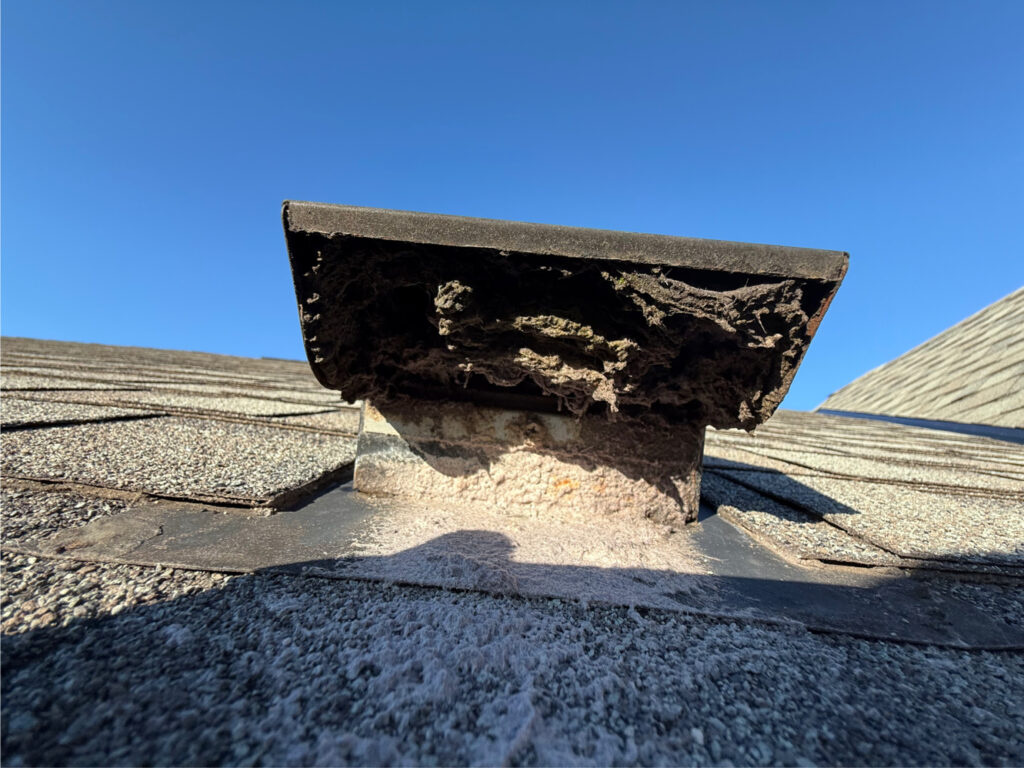
Cold weather causes them to clog very easily. Once you mix any temperature below 32 degrees Fahrenheit with warm condensation and lint, that lint collects and freezes to the first spot it touches.
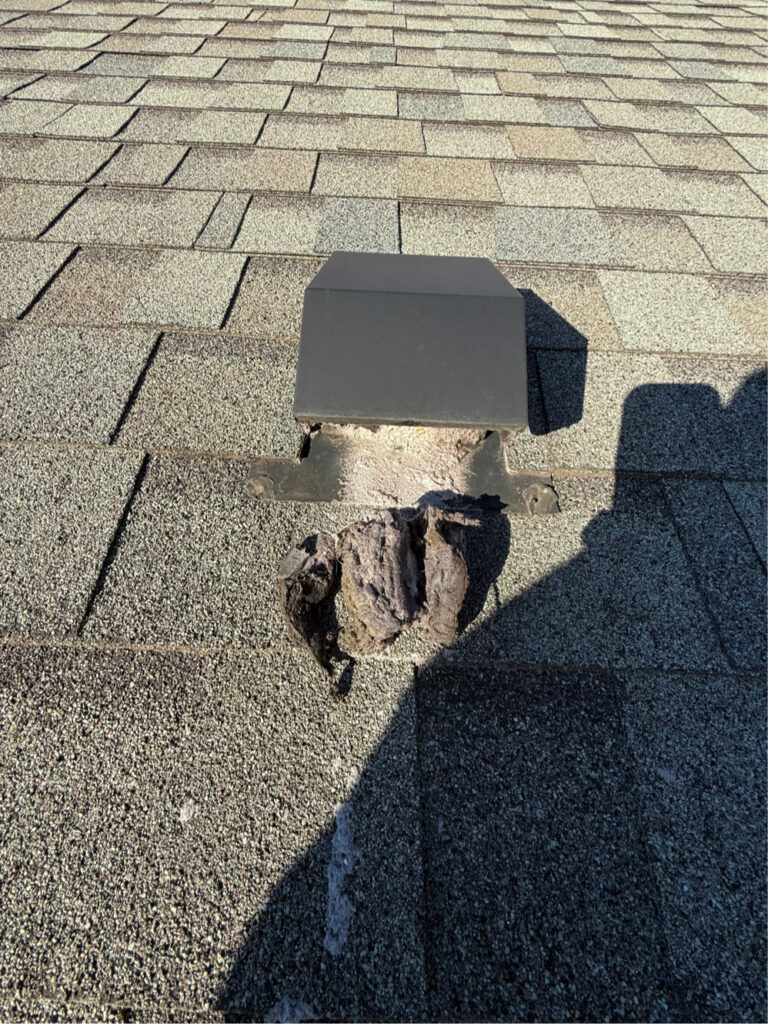
Once there is enough lint built up inside, the lint starts to travel to the outside of the cap just enough to wick moisture from rain and melting snow. Now that moisture is traveling down into your laundry room where you will ultimately have a leak. Whether it be behind your dryer, or inside of your dryer, the water has to go somewhere, and water causes damage.
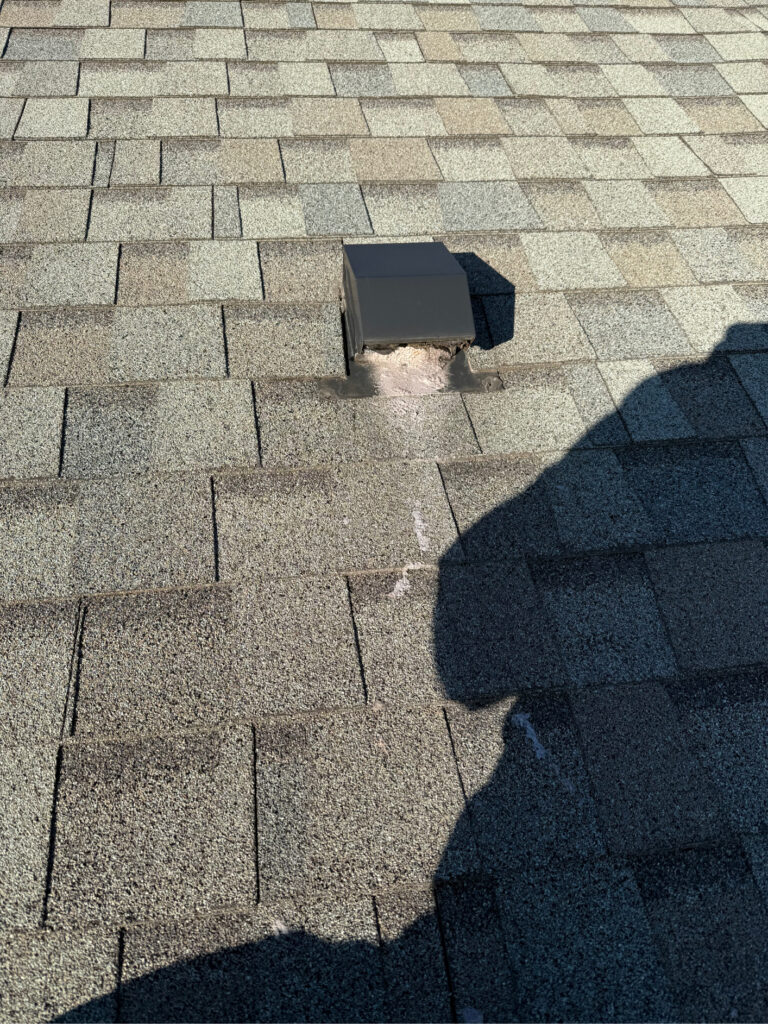
Out of all of homes that I have personally cleaned, only one house had the proper dryer vent termination. ONE! And it was only installed one day before I arrived for a professional cleaning, (The homeowner didn’t know we installed the proper terminations). The style you are looking at is called a “Broan”.
Guess what?! It’s not even designed for a dryer vent to be exhausted out of! It’s designed for a bathroom exhaust fan!
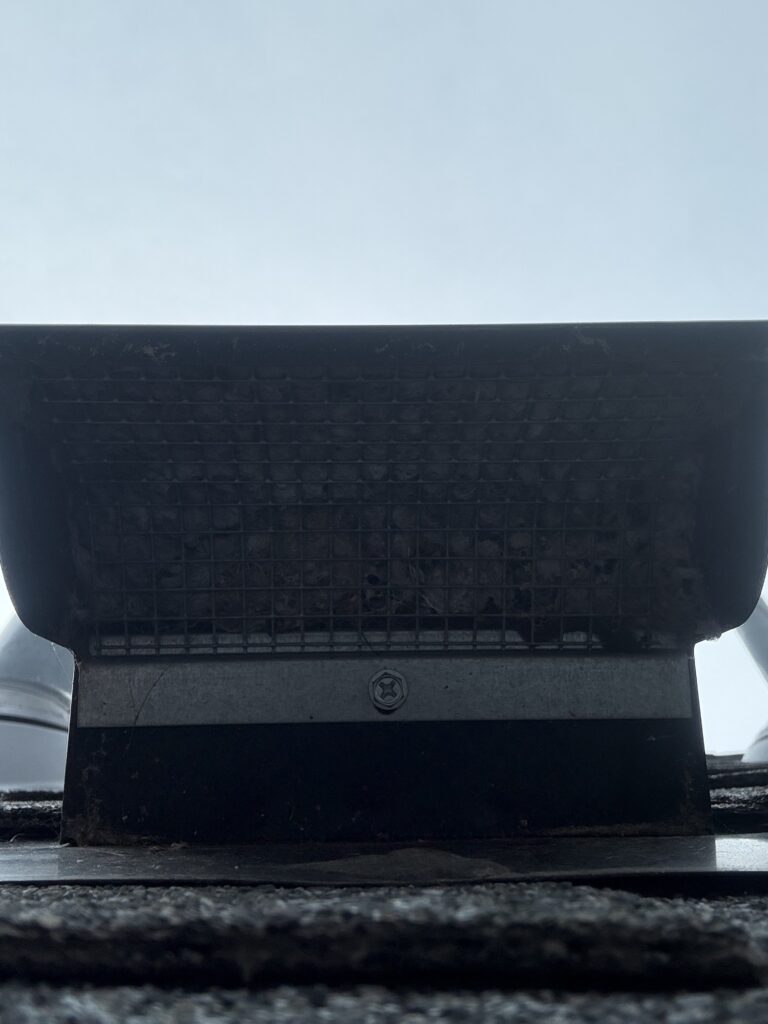
These Broan style bathroom exhaust caps come with a screen inside as well. These screens are allowed for a bathroom exhaust fan, but not for a dryer vent exhaust. I usually find a screen on 50% of the homes I service with a rooftop dryer vent. The homeowner more than likely had a new roof installed 6 months to 2 years prior to having problems too. You get a new roof, you get a new “dryer exhaust cap”.
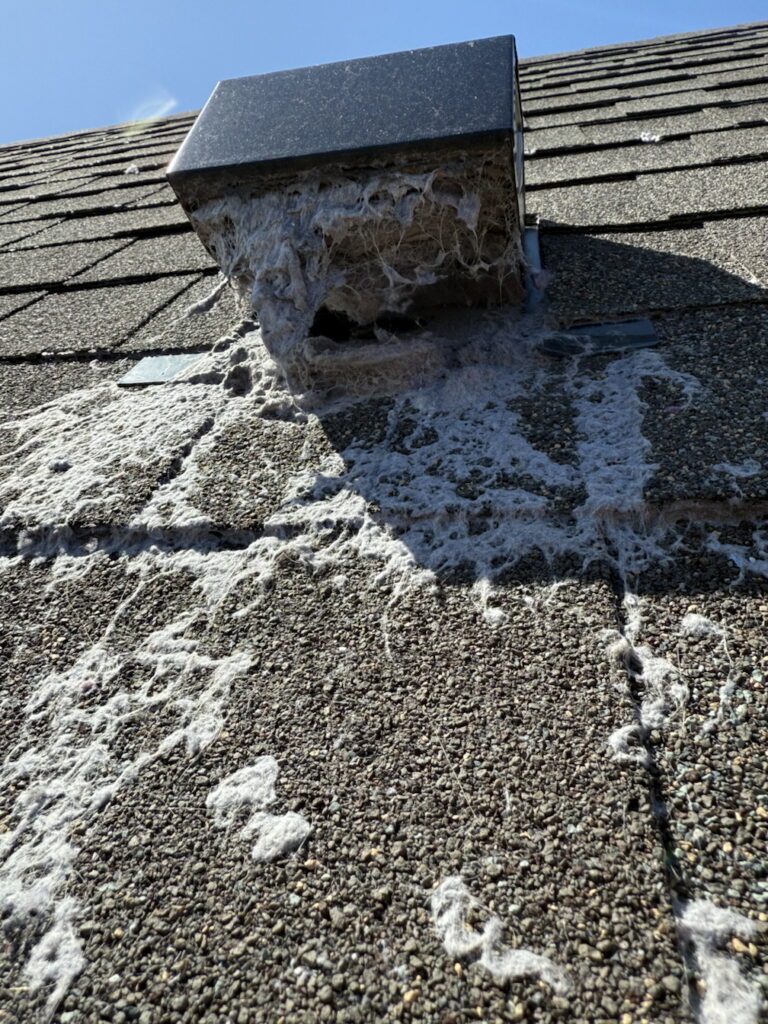
These caps are also full of nooks a crannies and just so many places for lint to accumulate. They also have a smaller opening, so the airflow I get out of them after a thorough cleaning is never what it should be.
Your airflow reading should be 1500 FPM (Feet Per Minute) or more after a cleaning. With this style of rooftop termination, I have only seen over 1500 FPM about 4 times. Yes, you read that right….4 times.
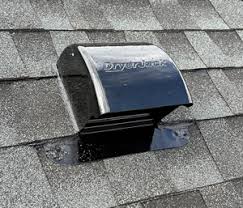
If you’re wondering what the correct rooftop dryer vent cap, exhaust, termination, or whatever you would like to call it, this is it.
It’s called The Dryer Jack. The interior is nice and smooth with no nooks and crannies for lint to accumulate. It’s plenty wide enough to exhaust the lint exceptionally well. This also increases airflow because there are no obstructions within this cap.
Overall, this is a much much better option, because this is what is designed to be on your roof. And yes, we install these.
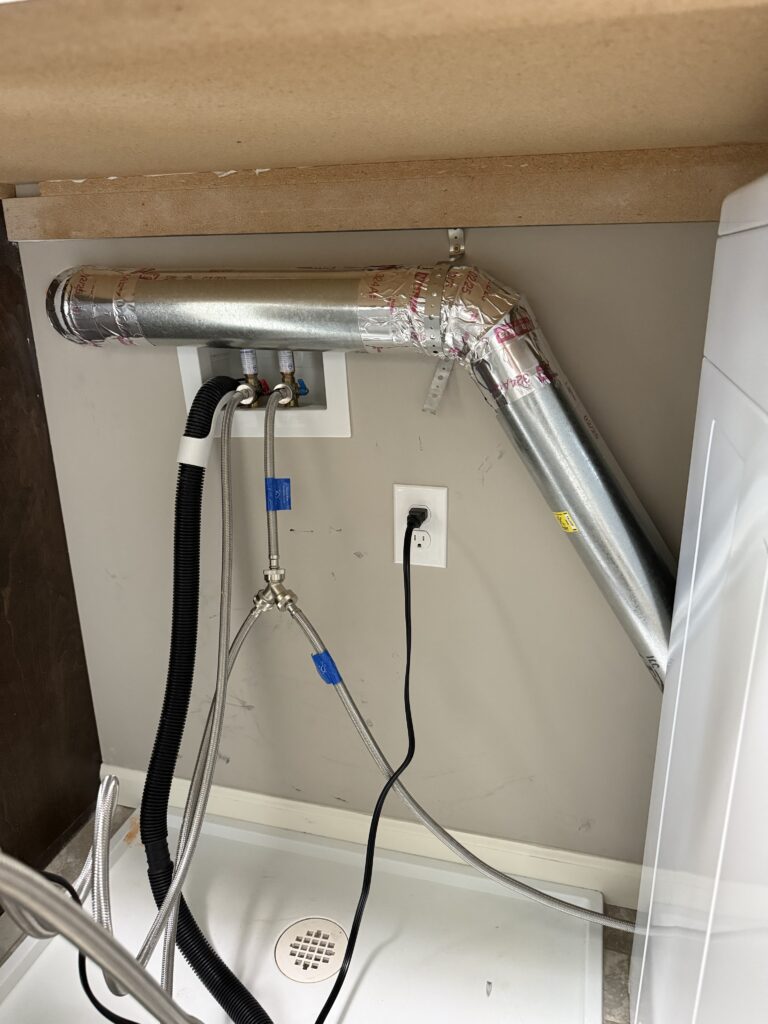
If you absolutely don’t want a rooftop dryer vent anymore, you may have the option of having a dryer vent reroute through the side of your home.
Here are some more reasons why I don’t agree with having a dryer vent on the roof.
- The more holes you have on your roof, the higher the chance of having water intrusion. You would not believe how many of my customers have had water entering from their rooftop dryer vent.
- A dryer cannot exhaust as well going vertically up through a roof as it can horizontally out the side of the home.
- In cold weather states, like Minnesota, the cleaning time frame for a dryer vent located on the roof, is limited to about 8 months due to snow and ice.
- It costs more to have them cleaned professionally, and you have to have them cleaned more often.
- The homeowner may not be able to clean it themselves due to access, fear of heights, etc.
Frequently Asked Questions — Rooftop Dryer Vents
Every 6 to 12 months. Rooftop vents accumulate lint significantly faster than side-wall exhausts due to condensation, freezing temperatures, and the vertical run. If you have a Broan-style cap, it may need cleaning even more frequently.
The Dryer Jack is the only exhaust cap specifically designed for rooftop dryer vent termination. Unlike the Broan-style bathroom exhaust caps installed on most Minnesota homes, the Dryer Jack has a smooth interior with no lint-trapping nooks, a wider opening for proper airflow, and is built to handle dryer exhaust. We install them alongside cleanings.
Yes. When lint builds up inside a rooftop cap, it wicks moisture from rain and melting snow back down into the vent and eventually into your laundry room. We’ve seen water damage inside dryers and behind walls as a direct result of clogged rooftop vents.
In many cases, yes. Depending on your home’s layout, we may be able to reroute your dryer vent to exhaust through the side of the house instead — which is always the better option. We assess this during every rooftop cleaning appointment.
Our rooftop cleaning season runs approximately 8 months of the year due to snow and ice. Book early in fall before conditions make roof access unsafe. We can sometimes access the dryer vent pipe through the attic as well. That just means we will have to disassemble your pipe, and hopefully reach the frozen lint and remove it. (This is a tight space)
Dryer Vent Cleaning Price Estimate
| Service | Details |
|---|---|
| Where does the dryer exhaust out of the home? | |
| Price | $— |
Not sure if your system is safe? Check our Dryer Vent FAQ
Looking to Hire a Professional? Look for the Logo


MN Dryer Vent
| Monday | 7:00 AM - 7:00 PM |
| Tuesday | 7:00 AM - 7:00 PM |
| Wednesday | 7:00 AM - 7:00 PM |
| Thursday | 7:00 AM - 7:00 PM |
| Friday | 7:00 AM - 7:00 PM |
| Saturday | Try our BOOK ONLINE Feature!!! |
| Sunday | Try our BOOK ONLINE Feature!!! |